Blog

  • The Gulfstream Hospitality

    The Gulfstream Hospitality:

    Started production in the 1950’s with the G1, putting excellence and customer satisfaction. It is evident that they’ve consistently maintained the originality of their mission since inception as a company in the 1950’s which is to put customer satisfaction ahead of profits. Private jets are an elite’s toy for comfort, style and luxury. For most business corporations, it is a machine that aids time efficiency. Time is money and a lot of the big businesses run time sensitive transactions. There are some destinations that airliners have non-daily or no scheduled flights to, and some of those locations may be of business interest to big companies. Sometimes it’s the timing of their appointments and meetings, for some business men, every hour in a day is a critical resource for business continuity and to meet up to their obligations. In as much as the Private jet life is stylish, luxurious and comfortable, it is most importantly an efficient way for time management. Some of the most popular corporate jet manufacturers include Gulfstream Aerospace, Bombardier Aviation, Dassault Aviation, Embraer, Textron Aviation. I’ll leave out Airbus Corporate Jets(ACJ) and Boeing Business Jets(BBJ). Each manufacturer brings unique strengths to the table, whether it is range, cabin luxury, or advanced avionics. A lot of factors determines the customer’s choice on the private jet to buy, some factors are; travel needs, budgets, range/performance, operational costs, cabin comfort/amenities, maintenance support provided, geopolitical allegiance and more.

    Farnborough May 2025

    For those that have seen my previous blogs, you can tell my background is Bombardier aviation. I’ve been flying Bombardier aircraft since 2013 and have a strong connection to the brand. On one of my posts, it was evident that I currently fly a Global 7500 being the newest in the Bombardier Global series as of today, it’ll be the same type-rating and qualification with the Global 8000. My articles caught the attention of a senior member of the Gulfstream Aerospace team. Applauding my work and commitment to sharing my flying experiences, giving safety enhancing tips with real life scenarios, I was elated because my publications were primarily to inspire those that may need it and a pass time hobby to let aviation enthusiasts see through our working lenses. Then came the offer. “If you like, when I next bring one of the new Gulfstreams to Lagos I’d love to show you on board..! Or if you find yourself in London for some time, we could host you for a flying session in our symmetry flight simulator”. Of course I jumped on the opportunity to learn about the Gulfstream airplanes. The plan was for me to get in contact when I’m off work and available for this exciting opportunity. After a very busy tour and finally home for a well deserved rest, I reach out as agreed and a small team was immediately put in place to harness the plan. Just noteworthy, the gentleman(Gavin Thompson) that coordinated this experience is easily one of the best humans I’ve encountered. We’d a great conversation on the group. From aviation related matters to football and other subjects, amazing first impression and great personality. A few days after, the arrangements were concluded and I got a notification with details of my transportation arrangement. A Mercedes S-class with a chauffeur and a schedule, the Gulfstream way! This elevated my anticipation and excitement, the arrangement was excellent.

    Farnborough Airport

    A day to our appointment, I got a notification of an emergency addition to the simulator schedule as a result of crew duty this led to a slight time adjustment. The intentionality from the coordinator was impressive, He understood that their guest needed to be kept informed. I waited a few days for this slot, I guess a few hours had nothing on my excitement. Travel day finally came, my pick up was here early and the Gulfstream hospitality started immediately. Chris was an exceptional professional, very experienced and warm. I paid attention during our conversations to have an understanding on how passionate He was about His job. When He mentioned that He’s worked with Gulfstream for more than 8 years, it all made perfect sense. His conduct wasn’t just that of a happy associate, but a great ambassador of the Gulfstream brand. I was impressed as it reiterated the importance of keeping your staff and associates happy. They are the best promoters of your business, and Chris was that guy. I felt honored already from the first physical contact with Chris. Our long ride to Farnborough airport was smooth with lots of great conversations and learning. I already started understanding more about what I’ll call the Gulfstream culture. It wasn’t just about making great airplanes, there was more to the brand. You could tell they are passionate about excellence regardless of the cost, customer satisfaction and quality service was definitely on top of their list.

    Flight Safety International

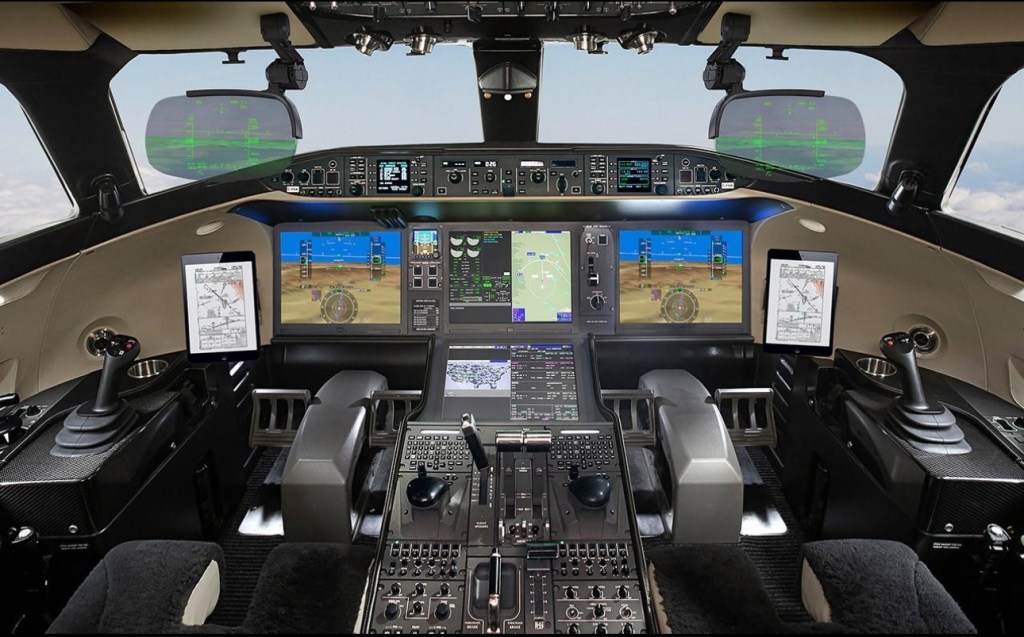
    First stop was Flight safety international for the flying part of my experience. I was welcomed warmly by Gavin Thompson and the FSI team(Megan Grigg and Tim Lewis), did some catching up with Gavin and then proceeded to a briefing with my instructor(Tim). Oh so I don’t forget to mention the FSI setting was an amazing extension of the FSI facilities in the States. Being my first time in an FSI facility outside the US, I was impressed. The instructor was a super great guy, very grounded and knowledgeable about the airplanes. Got in the simulator and instantly loved the flight-deck. I was surprised at the simplification of the flight-deck, it was nothing like I’d imagined. I’ve been in the airplane’s flight-deck once in Lagos, but I guess a glance is totally different from settling in with an open mind to learn and fly. With brief instructions, I lined up on JFK’s Runway 04R and advanced the throttles, took-off with the Head Up Display(HUD) and we were airborne nicely. Hand-flew the airplane with no automation to have a feel of it, then the 60 million dollars ($60m) reveal was experienced first hand. ‘THE ACTIVE SIDE-STICK TECHNOLOGY’. During our briefing session, the instructor praised this technology saying it’s so genius that to Him it is worth $60m of the total jet cost. Oh yes! I agree. From a pilot’s point of view, the active side-stick is superb. It retains our natural feel of the aircraft, that gives the ability for real-time adjustments, improved situational awareness which increases safety and enhances performance.

    G600 Flight-deck

    We shot the first instrument landing approach(ILS 04R) and I had a nice first landing of the Gulfstream 600. I was amazed and wanted to do it again to be sure it wasn’t a fluke. Wanting to taxi off the runway and I realized the tiller was in an unnatural position, that was meant to be my first ‘gotcha’ moment, in my head “I knew I’ll find a flaw”. I queried Tim about this and He told me to use the rudder for my turns, really? That’s awesome, the last time I steered with the rudder during taxi turns was in flight school. The rudder steering during taxi is amazing, I liked it and the airplane was very stable on ground taxis. Went on for the next flight and again, this airplane is so simplified and great to fly that I kept wondering until the lightbulb moment “Oh that’s true, it’s an American airplane” For context, the Americans like to keep it simple and yet make it make sense. I love it!. The second Landing was what Captain Sam will call a Super greaser. I’m sure my instructor enjoyed the ride as much as I did. I don’t think the awesomeness of this new Gulfstreams are being spoken enough of. I give the design engineers and the entire team their flowers. Oh lest I forget, the dual option Go-Around button is a game changer for the Go-Around maneuvers and I know pilots will love it. An electric rudder pedal adjustment would be a nice addition though. From a cockpit standpoint, the G-600/700 is arguably top of the line.

    Airborne KJFK Airport

    Flying concluded and a debrief with my instructor was completed, had a photograph with the team and they also gave me a bag of souvenirs. Next stop was the biggest Gulfstream maintenance facility outside the United States, the size and location of this facility clearly shows Gulfstream aerospace is about excellence. I met with the General Manger(Mark Bates), who showed me amazing features of the facility. Apart from the large ramp, fuel farm, amazing lounges, offices and state of the art maintenance hangars, something stood out. The security protocol led by Mr. Eric Bell, was definitely a part of the organization that showed top quality. Every member of the Gulfstream team showed an admirable level of motivation and passion for excellence. I was glad when I got welcomed to be a part of the Gulfstream Aerospace Family. It’s all based on facts, Gulfstream doesn’t just build great jets, their customer service support is excellent.
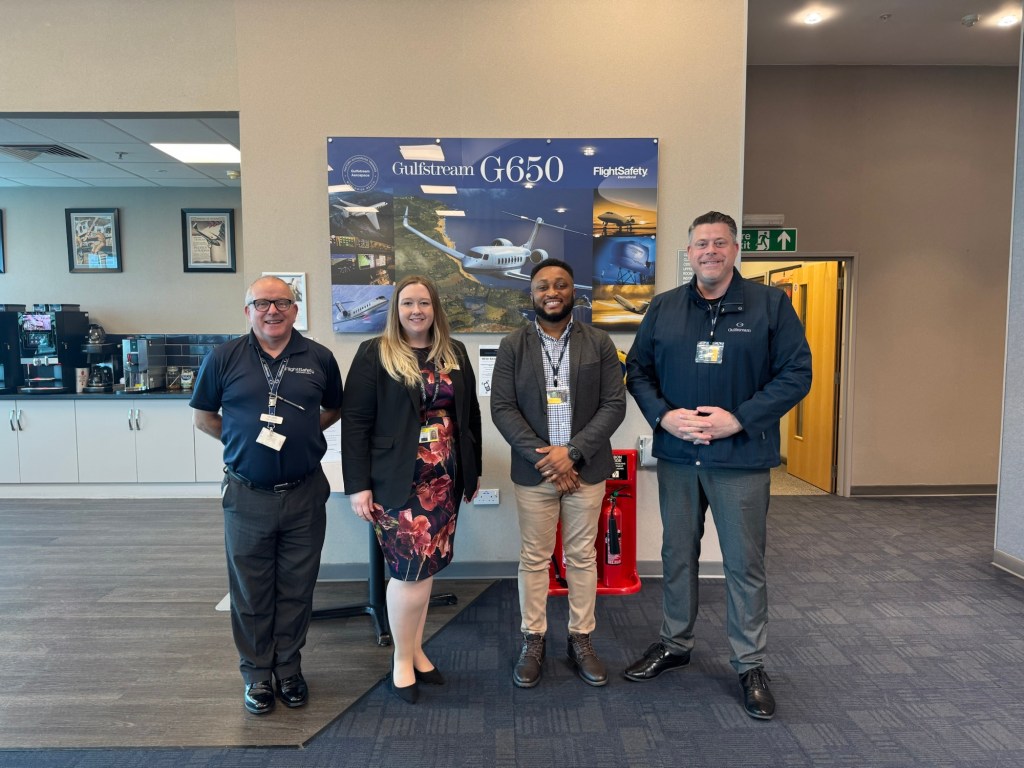
    Tim Lewis, Megan Grigg, Myself, and Gavin Thompson

    Thank you Tim Wood (Regional Vice President- Africa, Turkey & South Asia) and Gulfstream for the enlightening experience and souvenirs.
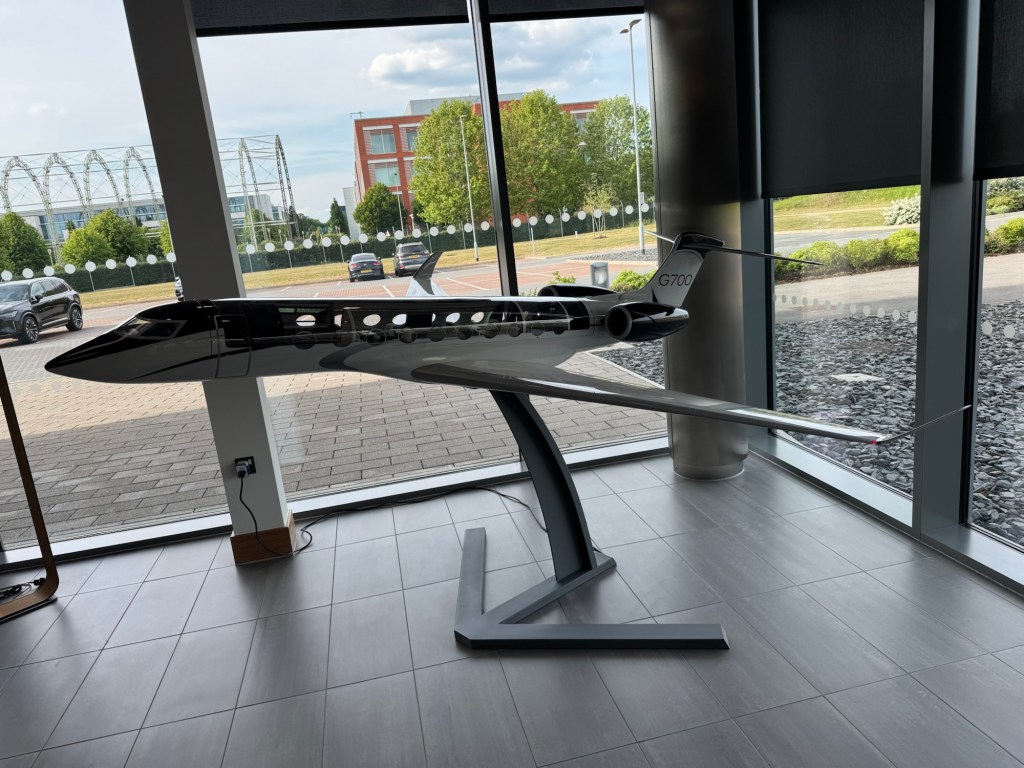
    G700 Model at Gulfstream Farnborough.
  • The Art of Aeronautic Decision Making.

    Some days you show up and don’t fly:

    Just like the old aviation quote, “Every takeoff is optional. Every landing is mandatory.” There is always a chance to make the call, that important  decision can save lives and avoid catastrophic consequences. In the interest of safety, no flight is too important to depart. Daily pilots all over the world are required to make decisions that may not be pleasing to some passengers, but very crucial in the interest of safety. There are quite a lot of reasons why a planned departure can be cancelled, some of the reasons are; airplane malfunctions, weather factors, regulatory requirements, crew health issues, passengers health problems,diplomatic reasons,conflict zones just to mention a few. I’ll be sharing some thoughts and sighting some first hand experiences relating to showing up at the airport ready for a flight and not flying as planned and in some cases you are airborne and have to either return back to base or divert to a suitable alternate aerodrome. 

    CL-605 APU snag in London Biggin Hill Airport 2013

    Airplanes are machines, and breakdown more often than people realize sometimes minor breakdowns are dealt with on the spot and in some cases the Manuals are consulted and the snag deferred if sufficient redundancy is available and allowed by the Minimum Equipment List. In other cases the airplane may require further troubleshooting, replacement parts and maintenance. With the Bombardier Global series, a complete shutdown and battery disconnection between 5-10mins have been an effective method to clear snag messages. If it’s a complete component failure, that reset procedure is ineffective and maintenance will be required. Weather can be another factor that can lead to a show up and no flight, the elements of weather can sometimes change so quickly and affect a planned departure. There are times when passengers delay and forecasted weather closes in and make departure  or destination weather to drop below limits thereby leading to an outright flight cancellation. 

    Global 6000 breakdown in Lagos 2022

    Health and safety concerns leads to flight cancellations or airborne diversions. Like the machines, the human body can breakdown at unpredictable times and in aviation health is a crucial factor in operations. There is a popular acronym we use to check fitness to fly called IMSAFE checklist-Illness,Medication,Stress,Alcohol,Fatigue, and Emotion. If a crew-member shows up and unable to tick the checklist, that crew is unfit to fly and this can lead to a flight cancellation. There are instances where the passengers are unable to show up for planned departures as a result of not being to fly and in the corporate aviation sector, this can lead to an outright flight cancellation. One time during my charter operations phase, a charterer showed up so late that crew duty time was affected and we unfortunately had to cancel the flight. We didn’t have enough duty period to fly from Abuja to Lagos, it was an eventful night, but the regulations are there to protect everyone and must be adhered to. The lead passenger was visibly upset and made an alternative travel arrangements the following day. 

    Abuja Airport 2016, weather shutdown.

    Airborne returns and diversions are also common scenarios where you don’t arrive at your planned destination, return to your departure airport and this can be for several reasons. On my last flight on the Challenger 605 aircraft in 2021, I was flying out of Lagos to Abuja and on climb out we noticed the aircraft was having pressurization issues. We requested to stop climb at 9000ft and returned back to Lagos. Thankfully the VIP was understanding and didn’t make an issue of the situation. On another occasion in 2022 after flying for almost 7hours from Lagos to Dubai on the Global vision, diplomatic issues made the United Arab Emirates  air traffic controllers refuse to accept our aircraft into their airspace. All overflight permits,landing rights, and required paperwork were secured prior to this flight, but the Saudi Arabia controllers were unable to hand us over to the next controllers. We had to pick up a hold close to the entry point for 45minutes, nothing changed. We diverted and landed in Riyadh as our fuel reduced, refueled our aircraft and commenced investigations as to why we were denied entry into their airspace. Long story short, it was diplomatic issues and we ended up flying to Muscat where alternative arrangements were in place to fly passengers to Dubai. 

    Oberpfaffenhofen Airport in Germany

    In conclusion, A pilot’s Aeronautic Decision Making (ADM) must be effective. The pilot in command must always put safety first when faced with making the critical decision. As an old pilot always said to me “No flight is compulsory” it is better to make the right decision and explain afterwards than fumble, escalate the problem,or worst case cause a catastrophic accident. In aviation,safety is everything and must always be priority.

    Safe skies! Capt. CLC.

  • Versatility of Corporate Aviation Crew-members:

    There’s been a professional comparison between the airline and corporate aviation crew members, with some misconceptions regarding the scope of work the corporate aviation crew has to do. I’ll be sharing some experiences in this article to broaden this conversation and shed some light to the level of inventiveness required to be a successful corporate aviation professional. The rapid changes in events make it imperative that a corporate aviation crew must be dynamic in nature, a multitasker and a critical thinker. Self discipline is also very important in the corporate aviation environment. Events go sometimes from very slow to super fast, and the onus is on you to be ahead of the curve to keep safe.

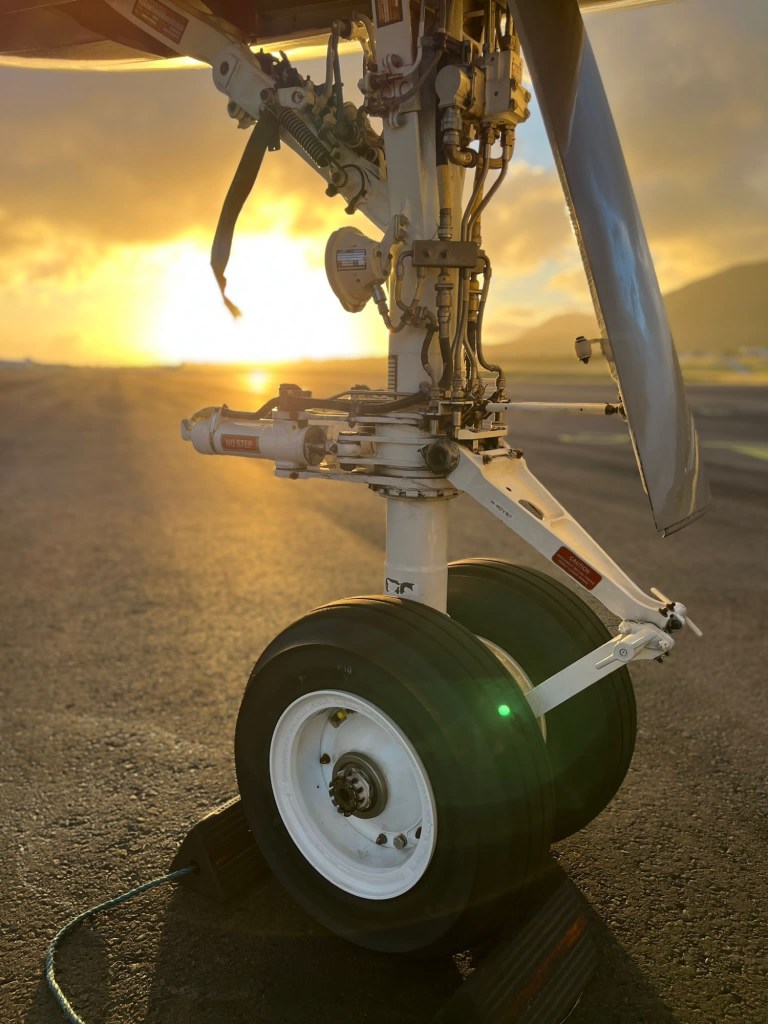
    Random shot St. Kitts and Nevis Island 2024

    In corporate aviation, no department is spared from having to work outside their original work scope for the purpose of achieving a safe and smooth flight operations. The involvement of everyone is paramount to achieve the set goal. From a cockpit crew-member’s perspective, you sometimes work as the cabin attendant, accountant, flight dispatcher, baggage handler, trip coordinator/manager, administrative manager, engineer/technician and the list can go on. In corporate aviation, the company can’t specifically predict all the airports the operations will fly into and it is not realistic to have staffing at all destinations. Sometimes you are able to contract designated companies for support and other times the support is just not available at your destination, in such cases you’ll have to develop a working alternative.

    Highlighting on the high level of adaptability required of a corporate aviation crew-member, I’ll sight an example in this paragraph. Crew are expected to acquaint themselves with newer flying environments in the shortest possible time, exposures to different airports, airspaces, regulations isn’t something a scheduled operator/ airlines have to worry about. In 2014 I was worked for a charter company in Lagos Nigeria that operated tow challenger 604 aircraft, I was scheduled to fly to Abuja the Capital city of Nigeria. Upon arriving at the airport for my flight, an operational crew swap became necessary.I ended up operating the other flight, a maintenance flight from Lagos to Atatürk airport in Istanbul. On that trip I reflected deeply on the high level attentiveness required to be a safe corporate pilot.

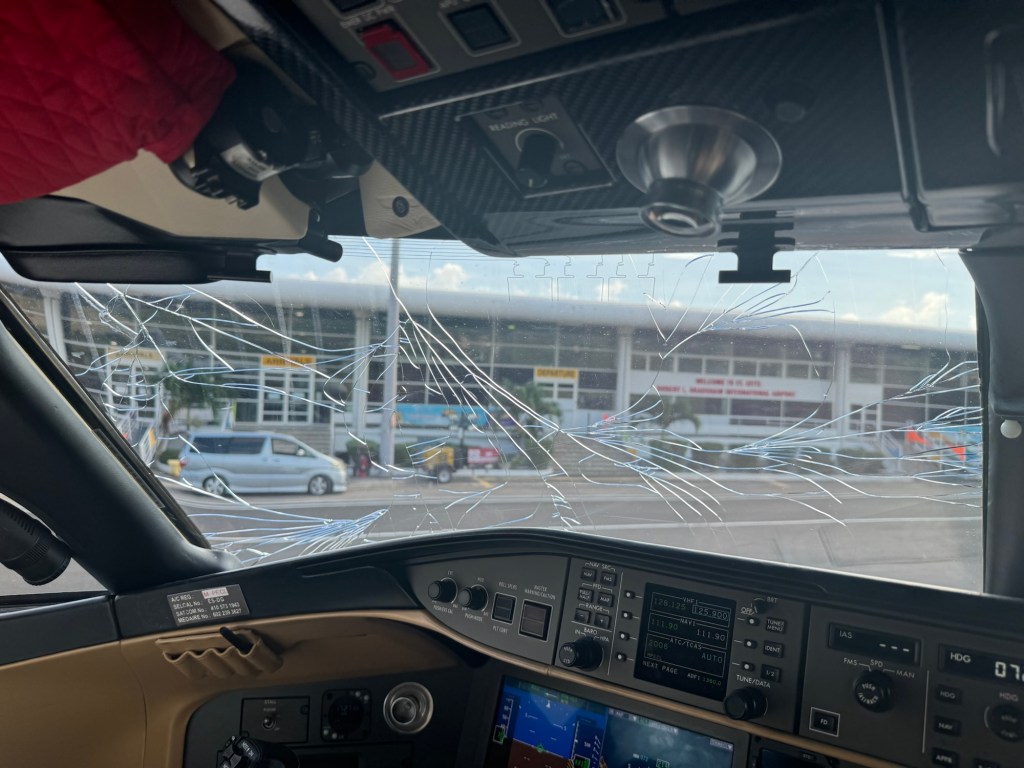
    Shattered Left Windshield Global 6000

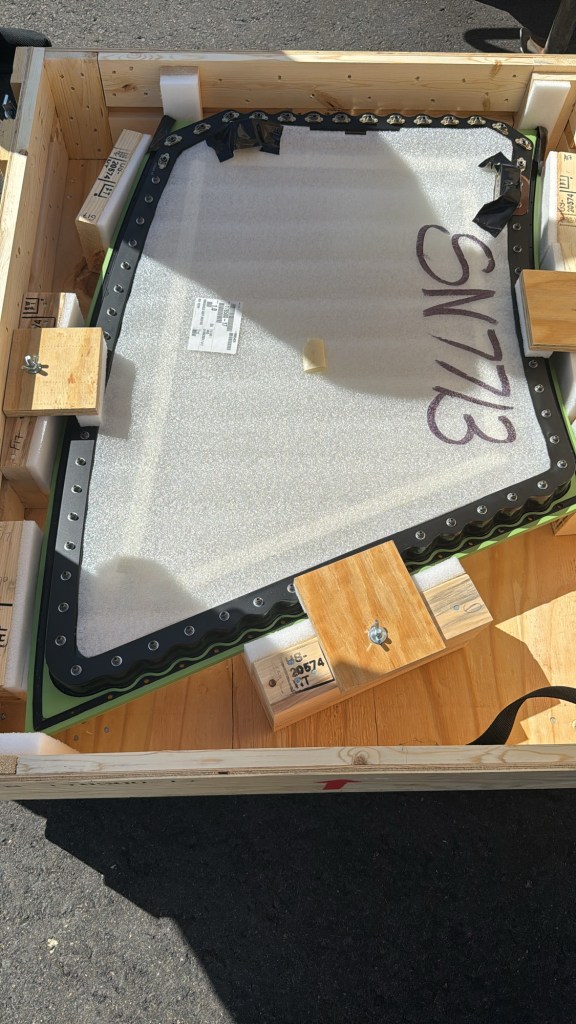
    Another good experience is the one I refer as “stuck in paradise” in January 2024 after the holidays were over, and our return flights in full swing. Flying out of Atlanta,USA to the beautify Island of St. Kitts, we encountered a Left windshield heat snag. After running through the checklist, the Crew Alerting System(CAS) message disappeared, and we completed the flight safely. Upon arrival we secured the aircraft, only to arrive the following day to meet a shattered outer ply of the windshield. What followed was a painstaking process of sourcing for the parts, getting a qualified engineer to the island and meeting all other logistical requirements for customs, transportation of the windshield, high-lift equipment rental and all. 

    Work in progress January 2024
    Stowing the shattered windshield

    With limited resources on the island, my colleague and I had to be hands-on and were both technically involved in the replacement of the windshield. Without the benefit of a hangar and full equipment, it would’ve been a grueling task for one engineer outside a well equipped maintenance facility to replace the windshield. It took us two full days to complete the task under the island hot sun. My favorite phrase at the time was “sometimes pilots, other times mechanics”.  The “stuck in paradise” experience, reiterated the importance of teamwork and improvisation as a vital trait in corporate aviation.

    Unboxing secured replacement windshield
    Windshield replacement in progress

    In conclusion, in corporate aviation you more often than not have to get involved in getting things done be it your department or not. You most times don’t enjoy the privilege of showing up, getting briefed by dispatch and just fly the airplane. You’ll be involved in the flight planning, training scheduling, hospitality arrangements, maintenance and so on.

    Safe skies! Capt. CLC.

    Bonus Media:-)Crew Altering System(CAS)
  • Privileged views inflight

    Privileged views inflight:

    March 2025 flying into Los Angeles LAX

    A popular saying, “I get paid to look out the window” pilots are some of the luckiest human beings. From the encounters with Mother Nature to magnificent views of the creations, and sometimes inexplicable encounters with the mysteries of the universe. One mysterious encounter that’ll live with me for the rest of my life is my Unidentified Flying Object (UFO) experience. That experience changed my perception of the existence of Aliens and the likes, we are definitely not alone. I’ll write about this another day.

    Somewhere over the North Atlantic

    In this article I’ll be sharing some of the great views we enjoy as pilots. The flight days avionics you interact with still remains satisfying, given how amazing this technologies are. From the steam gauges or what some will call 6 packs to the semi glass and then full glass cockpits to now advanced systems like Synthetic Vision Systems(SVS), Enhanced Vision Systems(EVS), Head Up Display(HUD), Electronic Flight Bag(EFB),Touchscreen technology in the cockpits, we must all appreciate the advancements in technology. Technological advancement has lessened the buttons, simplified the interfaces, reduced the need to carry heavy hardcopy libraries and the list can go on and on. In summary, Technology has made flying safer.

    HUD/SVS/EVS view Global 6000
    First hand sighting of Traffic

    The views outside the windows in many cases are breathtaking, from the snowy mountains of the alps, the gorgeous dessert of the Sahara with it’s dunes rising and falling like the waves of a golden sea, the whiteout views over Canada,sunsets and sunrises. Beautiful early morning views at the airport on clear days, views of coastlines, the amazing well lit cities, the calm night skies with beautiful stars, the elements of weather airborne, busy city views like the Vegas strip and the list can go on. I can assure you the views are always best from the top. As the saying goes “ Pilots, looking down on all since 1903”

    Sunrise heading East over the North Atlantic
    Early Morning Airport view in Atlanta
  • The Flightcrewing Dynamics

    Building a Cohesive Team:

    As a seasoned pilot, I’ve had the privilege of flying with various crew members, each with their unique personalities, skills, and experiences. Effective flightcrewing dynamics are crucial to ensuring safe and successful flights. In this article, I’ll share my insights on building a cohesive team and highlight the importance of communication, trust, and adaptability. In General aviation, different flight operations have their own uniqueness.

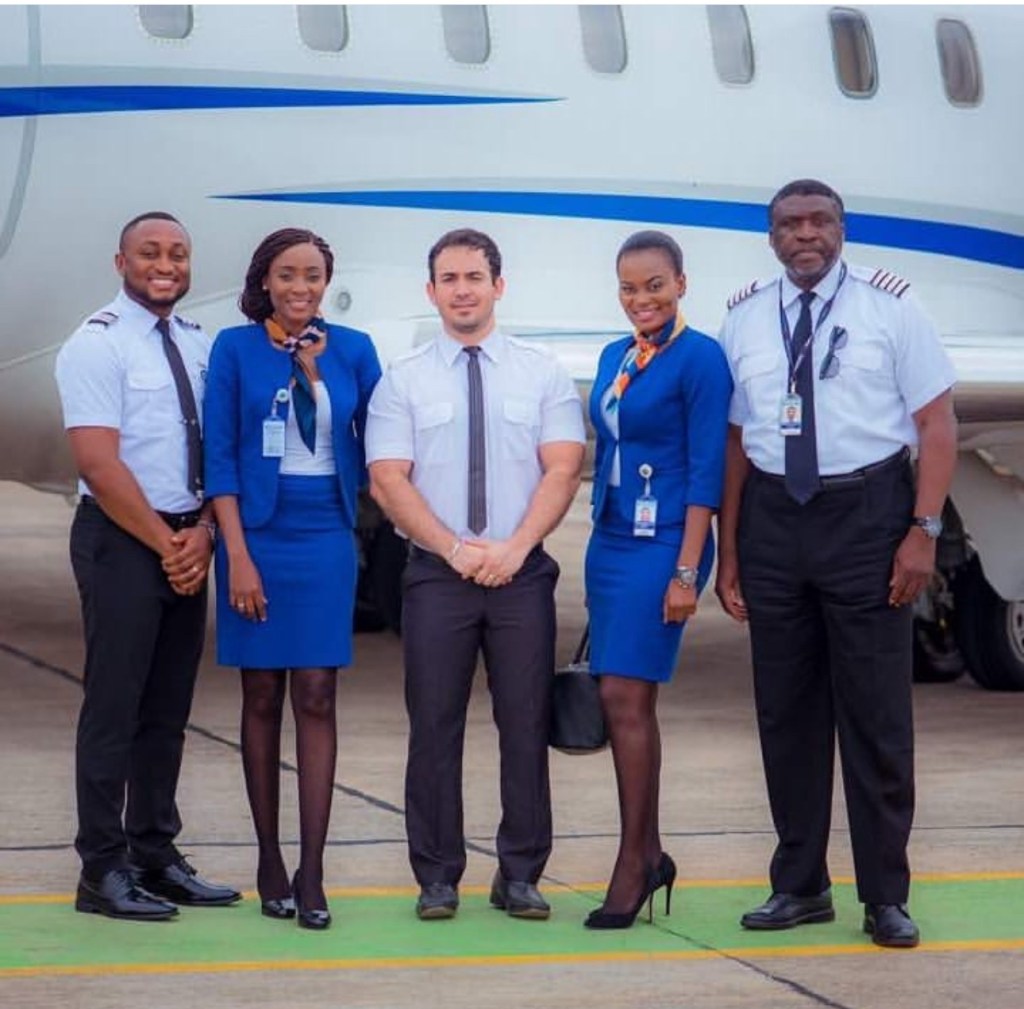
    Team: Jet Leasing Support Services 2014

    Communication: The Foundation of Flightcrewing Dynamics;

    Clear and concise communication is the backbone of any successful flight. As pilots, we must be able to effectively convey our intentions, plans, and concerns to our crew members. This includes pre-flight briefings, in-flight updates, and post-flight debriefings.

    Trust: The Glue That Holds the Team Together;

    Trust is essential in building a cohesive flight crew. When crew members trust each other, they feel confident in each other’s abilities, and this confidence translates to better decision-making and improved overall performance. I can relate directly to this, as I’ve been lucky to be with some teammates for as long as over one decade. 

    Adaptability: The Key to Success in Dynamic Environments;

    Flightcrews often face unexpected challenges, such as changes in weather, air traffic control instructions, eccentric passenger demands,or aircraft malfunctions. Adaptability is critical in these situations, as crew members must be able to adjust their plans and strategies quickly and effectively.

    *Building a Cohesive Team*

    So, how do we build a cohesive flight crew? Here are some tips:

    – *Establish Clear Communication Channels*: Ensure that all crew members understand their roles and responsibilities and can communicate effectively.

    – *Foster a Culture of Trust*: Encourage open communication, transparency, and mutual respect among crew members.

    – *Promote Adaptability*: Encourage crew members to be flexible and adapt to changing situations.

    – *Conduct Regular Briefings and Debriefings*: Hold regular briefings and debriefings to discuss plans, strategies, and lessons learned.

    -*Keeping the team together*: In so many cases the administrators don’t comprehend the importance of keeping a team.

    2020 Transatlantic Ferry flight. Tech-stop in Dakar,Senegal.

    Conclusion;

    Effective flightcrewing dynamics are critical to ensuring safe and successful flights. By prioritizing communication, trust, and adaptability, we can build a cohesive team that works together seamlessly. Remember, a well-functioning flight crew is not just a team – it’s a family that relies on each other to overcome challenges and achieve their goals.

    Safe skies! Capt. CLC.

  • Stick vs. Yoke Flying

    Stick vs. Yoke Flying

    My first encounter with the sidestick was in April 2016 during my FAA ATP-CTP training in Orlando, Florida. Before that, I had always been a solid yoke pilot, loyal to the tactile control it offers. That initial exposure to the Fly-by-Wire system was nothing short of mind-blowing. Flying the Airbus 320 full flight simulator gave me a taste of its sleekness and precision. However, despite the incredible experience, I had my reservations—ones that I’ll delve into as I share my insights.

    Global 7500 Cockpit(Stick)

    As pilots, many of us have found ourselves swept up in the Boeing vs. Airbus debate. Back in flight school, it was a hot topic of discussion. Personally, I was indifferent—an aspiring commercial pilot focused on building a career flying airplanes for compensation and hire. I even applied for bush flying jobs in Botswana early on, though fate had other plans (thankfully, I wasn’t hired).

    After graduating, my career began with flying the Bombardier Challenger 605, a yoke-controlled airplane. Instinctively, I became a yoke pilot. The yoke’s tactile control resonated with me; it felt intuitive and allowed for precise maneuvering. However, the physical effort required—especially in turbulent conditions or during long flights—could be fatiguing.

    One of many command training flights. London Luton Airport flying to Lagos. Challenger 604.

    Fast forward to May 2024, and I transitioned from the Global 6000 to the Global 7500. This marked my true initiation into sidestick flying—a dream come true. Though it took some adjustment, the Fly-by-Wire technology amazed me. The sidestick’s ergonomic design reduces pilot input fatigue during long-haul flights, enabling subtle attitude and trajectory adjustments with minimal effort.

    Global 6000 Cockpit(Yoke)

    Each control system has unique advantages. The yoke fosters a visceral, connected experience, while the sidestick offers efficiency and reduced fatigue. Ultimately, it boils down to personal preference and adaptation. As pilots, the key lies in understanding these systems’ unique characteristics and mastering the techniques they demand.

    Landing the Global 6000 in Little Rock Airport.

    For those transitioning between control systems, here are a few tips to ease the process:

    Be patient and don’t get discouraged if it takes time to adjust. . Take your time to familiarize yourself with the new control system. . Practice and training are militant to developing the necessary skills and muscle memory. . Take your training very seriously, learn the theoretical part of the systems. It’ll develop your skills. Hopefully sharing my experience and insights is helpful to give perspective for pilots and aspiring pilots to understand the differences between sidestick and yoke and how you can enhance your flying skills and experience. Safe skies! Capt. CLC.

  • The North Atlantic Junkie

    The North Atlantic Junkie 1

    Since 2021, a typical day in my life as an Airline Transport Pilot involves flying over the North Atlantic, typically from North America to Africa or occasionally Europe. Every flight presents its own uniqueness, from choosing the most efficient route to coordinating flight plans, managing passenger demands (especially regarding luggage), and handling last-minute additions or cancellations of travelers. If departing from North America, there are new CBP (Customs and Border Protection) rules to consider—refer to the CBP website for details. If departing from Africa, timing the arrival landing slot is crucial, particularly when passengers are running late. Departures are typically early morning from Africa and mid-afternoon from the U.S.

    The North Atlantic can deliver smooth, moderate, or even bumpy rides depending on the season. Some days, we encounter storms reaching heights of over 40,000 feet, especially when severe weather advisories are issued. The most frustrating weather element is clear air turbulence (CAT). Thunderstorms, visible on the weather radar, can be avoided through deviations, but CATs are unpredictable. In some cases, you must reduce speed and ride it out, hoping it isn’t prolonged. Even with a forecast of en-route maximum shear of 7, which shouldn’t pose much of an issue, weather can evolve quickly. The longest CAT I’ve experienced was in December 2022, flying from Lagos to St. Kitts. The route, near the equator, presented at least 20 minutes of continuous moderate turbulence. Luckily, the wing design of the Bombardier Global 6000 cushions turbulence for smoother rides—a testament to Bombardier’s amazing engineering.

    Routing from Lagos to the Caribbean depends on the time of year: it’s shorter when flying closer to the equator but smoother when routing farther north near the Cape Verde Islands, even though it’s longer. Depending on the part of the NAT High Level Airspace (NAT HLA), you’ll communicate with Gander, Iceland, Bodo, Shanwick, Santa Maria, or New York ‘East’ OCAs. We always file to fly “random routes” rather than NAT Tracks, which require waypoints every 10 degrees of longitude. This reduces navigation errors, among other benefits. Recent changes in NAT operations have generally improved the safety of transatlantic flights. Advances like Future Air Navigation (FANS 1/A) have enhanced situational awareness for both pilots and air traffic controllers.

    Crew members who operate such long-haul flights are well-trained professionals who value teamwork, CRM (crew resource management), and synergy. I’ve been fortunate to work with exceptional pilots and cabin attendants with excellent communication skills. Their professionalism ensures that long days don’t feel longer. The high workload—from pre-flight to post-flight—demands committed teamwork. I’ve had many experiences flying over the Atlantic. One memorable instance involved a passenger touring the airplane mid-flight. She admired the cockpit and exclaimed, “Wow! This looks so cool, just like a video game. Can I play?” Though it was clearly a joke, my resounding “NO!” still cracks me up. Someone later sent me the video of this interaction on social media, and hearing my response again was priceless. By the way, it’s not uncommon to have passengers interact during our kind of operations.

    I’ve been privileged to fly two aircraft types on transatlantic routes: the Global 6000 Vision and the Global 7500. Both are manufactured by Bombardier, a renowned business jet maker. Operationally, the biggest difference is that the newer Global 7500 has a longer range, eliminating the need for tech stops in Sal Island (Cape Verde). Refueling in Sal used to be extra work, but I sometimes miss those days because it provided a short break from the airplane. The 7500’s extended range has simplified operations. Both aircraft are excellent for long-haul transatlantic flights. The Global 6000 has a cabin altitude of 6,000 feet at a maximum ceiling of 51,000 feet, while the Global 7500 boasts a slightly lower cabin altitude of 5,680 feet, which reduces fatigue and enhances comfort.

    When coasting out from the U.S., we communicate with New York-Santa Maria-SAL-Dakar. For westbound flights from Africa, the sequence is Dakar-Sal-Santa Maria-New York. In the past, we requested Oceanic clearance 60 minutes before reaching the oceanic entry point. However, since December 4, 2024, the North Atlantic Track (NAT) system implemented the Oceanic Clearance Removal (OCR) procedure, with the exception of Shanwick airspace. Pilots must now use CPDLC (Controller Pilot Data Link Communications) for all transatlantic flights above FL60. Typically, we receive primary and secondary HF frequencies from the last VHF controller before the oceanic entry point. Occasionally, controllers provide incorrect HF frequencies (e.g., night frequencies during the day), making it challenging to establish good radio contact. In normal operations, we contact ATC, perform a SELCAL (Selective Calling) check, and continue with CPDLC.

    Having flown across the North Atlantic more than 50 times in the last 3.5 years, here are some tips that have worked well for me:
    •⁠ ⁠Proper Planning: Collaborate with the right trip support managers, ground staff, administrative staff, crew members, and sometimes even passengers. Detailed planning influences key decisions like routing, fuel, and weather considerations.
    •⁠ ⁠Adequate Crew Rest: For early departures out of Lagos, I usually stay at an airport hotel. Every extra minute of rest counts.
    •⁠ ⁠Pre-Flight Prep: To reduce the cabin attendants’ workload, I plan a pre-flight inspection a day before the mission. This gives the cabin attendant extra time to prepare and allows me to check the aircraft systems.
    •⁠ ⁠Stress Management: Crossing multiple time zones can take a toll on physiology. I take annual courses on stress and fatigue management to help maintain my circadian rhythm.
    •⁠ ⁠Safety First: Always adhere to regulations, SOPs, aircraft manuals, checklists, and Go/No-Go guides. Remember, safety is paramount—you can always refuse to fly if conditions are unsafe.

    Flying over the North Atlantic is more than just a Job—it’s an ever-evolving adventure filled with challenges, teamwork, and invaluable experiences. From navigating unpredictable weather to mastering cutting-edge technology, each flight offers lessons that shape me as a pilot and deepen my appreciation for the craft. While the skies can be unpredictable, meticulous planning, collaboration, and a commitment to safety enhances flight operations. To fellow aviators and enthusiasts alike, embrace the journey, prioritize safety, and cherish the unique opportunities our world of aviation presents.

    Safe skies! Capt. CLC.

    Global 7500 Flying over the North Atlantic