The North Atlantic Junkie 1
Since 2021, a typical day in my life as an Airline Transport Pilot involves flying over the North Atlantic, typically from North America to Africa or occasionally Europe. Every flight presents its own uniqueness, from choosing the most efficient route to coordinating flight plans, managing passenger demands (especially regarding luggage), and handling last-minute additions or cancellations of travelers. If departing from North America, there are new CBP (Customs and Border Protection) rules to consider—refer to the CBP website for details. If departing from Africa, timing the arrival landing slot is crucial, particularly when passengers are running late. Departures are typically early morning from Africa and mid-afternoon from the U.S.
The North Atlantic can deliver smooth, moderate, or even bumpy rides depending on the season. Some days, we encounter storms reaching heights of over 40,000 feet, especially when severe weather advisories are issued. The most frustrating weather element is clear air turbulence (CAT). Thunderstorms, visible on the weather radar, can be avoided through deviations, but CATs are unpredictable. In some cases, you must reduce speed and ride it out, hoping it isn’t prolonged. Even with a forecast of en-route maximum shear of 7, which shouldn’t pose much of an issue, weather can evolve quickly. The longest CAT I’ve experienced was in December 2022, flying from Lagos to St. Kitts. The route, near the equator, presented at least 20 minutes of continuous moderate turbulence. Luckily, the wing design of the Bombardier Global 6000 cushions turbulence for smoother rides—a testament to Bombardier’s amazing engineering.
Routing from Lagos to the Caribbean depends on the time of year: it’s shorter when flying closer to the equator but smoother when routing farther north near the Cape Verde Islands, even though it’s longer. Depending on the part of the NAT High Level Airspace (NAT HLA), you’ll communicate with Gander, Iceland, Bodo, Shanwick, Santa Maria, or New York ‘East’ OCAs. We always file to fly “random routes” rather than NAT Tracks, which require waypoints every 10 degrees of longitude. This reduces navigation errors, among other benefits. Recent changes in NAT operations have generally improved the safety of transatlantic flights. Advances like Future Air Navigation (FANS 1/A) have enhanced situational awareness for both pilots and air traffic controllers.
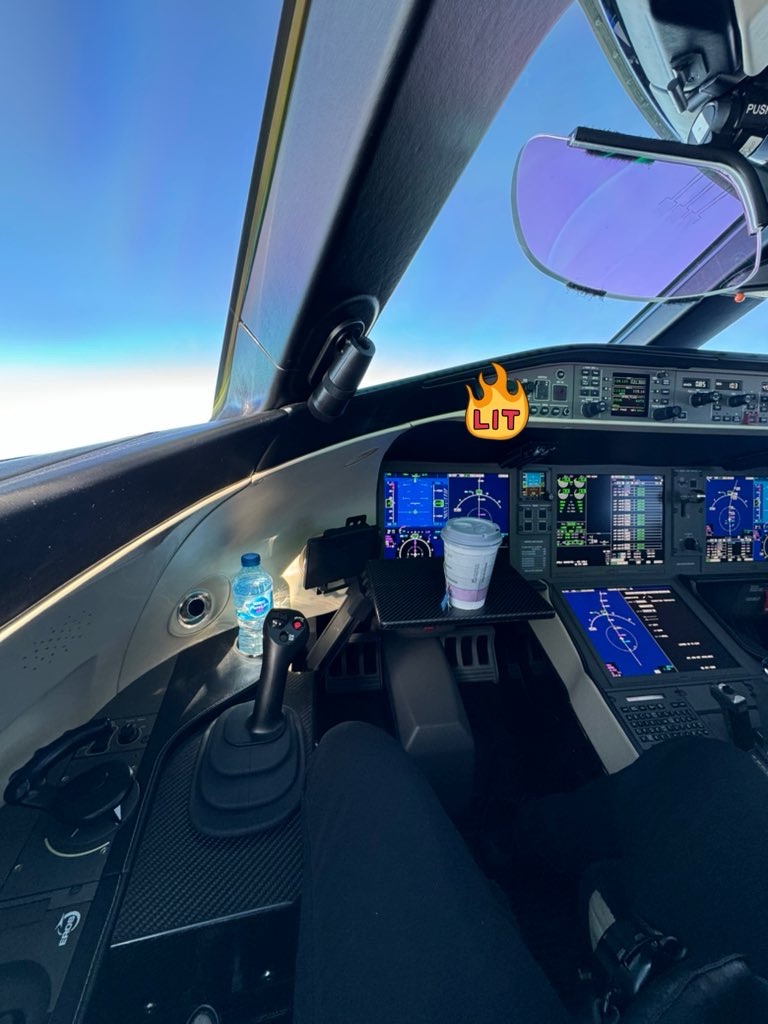
Crew members who operate such long-haul flights are well-trained professionals who value teamwork, CRM (crew resource management), and synergy. I’ve been fortunate to work with exceptional pilots and cabin attendants with excellent communication skills. Their professionalism ensures that long days don’t feel longer. The high workload—from pre-flight to post-flight—demands committed teamwork. I’ve had many experiences flying over the Atlantic. One memorable instance involved a passenger touring the airplane mid-flight. She admired the cockpit and exclaimed, “Wow! This looks so cool, just like a video game. Can I play?” Though it was clearly a joke, my resounding “NO!” still cracks me up. Someone later sent me the video of this interaction on social media, and hearing my response again was priceless. By the way, it’s not uncommon to have passengers interact during our kind of operations.
I’ve been privileged to fly two aircraft types on transatlantic routes: the Global 6000 Vision and the Global 7500. Both are manufactured by Bombardier, a renowned business jet maker. Operationally, the biggest difference is that the newer Global 7500 has a longer range, eliminating the need for tech stops in Sal Island (Cape Verde). Refueling in Sal used to be extra work, but I sometimes miss those days because it provided a short break from the airplane. The 7500’s extended range has simplified operations. Both aircraft are excellent for long-haul transatlantic flights. The Global 6000 has a cabin altitude of 6,000 feet at a maximum ceiling of 51,000 feet, while the Global 7500 boasts a slightly lower cabin altitude of 5,680 feet, which reduces fatigue and enhances comfort.
When coasting out from the U.S., we communicate with New York-Santa Maria-SAL-Dakar. For westbound flights from Africa, the sequence is Dakar-Sal-Santa Maria-New York. In the past, we requested Oceanic clearance 60 minutes before reaching the oceanic entry point. However, since December 4, 2024, the North Atlantic Track (NAT) system implemented the Oceanic Clearance Removal (OCR) procedure, with the exception of Shanwick airspace. Pilots must now use CPDLC (Controller Pilot Data Link Communications) for all transatlantic flights above FL60. Typically, we receive primary and secondary HF frequencies from the last VHF controller before the oceanic entry point. Occasionally, controllers provide incorrect HF frequencies (e.g., night frequencies during the day), making it challenging to establish good radio contact. In normal operations, we contact ATC, perform a SELCAL (Selective Calling) check, and continue with CPDLC.
Having flown across the North Atlantic more than 50 times in the last 3.5 years, here are some tips that have worked well for me:
• Proper Planning: Collaborate with the right trip support managers, ground staff, administrative staff, crew members, and sometimes even passengers. Detailed planning influences key decisions like routing, fuel, and weather considerations.
• Adequate Crew Rest: For early departures out of Lagos, I usually stay at an airport hotel. Every extra minute of rest counts.
• Pre-Flight Prep: To reduce the cabin attendants’ workload, I plan a pre-flight inspection a day before the mission. This gives the cabin attendant extra time to prepare and allows me to check the aircraft systems.
• Stress Management: Crossing multiple time zones can take a toll on physiology. I take annual courses on stress and fatigue management to help maintain my circadian rhythm.
• Safety First: Always adhere to regulations, SOPs, aircraft manuals, checklists, and Go/No-Go guides. Remember, safety is paramount—you can always refuse to fly if conditions are unsafe.
Flying over the North Atlantic is more than just a Job—it’s an ever-evolving adventure filled with challenges, teamwork, and invaluable experiences. From navigating unpredictable weather to mastering cutting-edge technology, each flight offers lessons that shape me as a pilot and deepen my appreciation for the craft. While the skies can be unpredictable, meticulous planning, collaboration, and a commitment to safety enhances flight operations. To fellow aviators and enthusiasts alike, embrace the journey, prioritize safety, and cherish the unique opportunities our world of aviation presents.
Safe skies! Capt CLC.
 Crew Lounge